What should you pay attention to when sleeping at altitude?
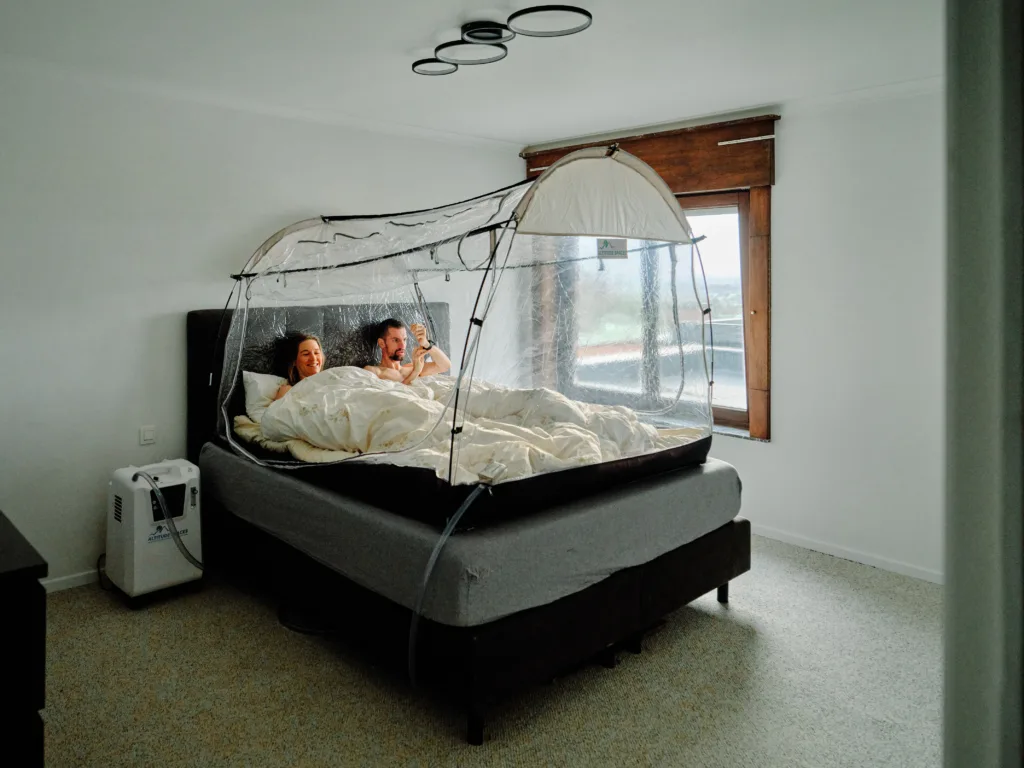
Altitude tents are an effective way to improve your condition by replicating the benefits of low-oxygen conditions such as those at high altitude. These tents, which are becoming increasingly popular for use at home or in training rooms, help both top athletes and avid amateur athletes. Lowering the oxygen level in the tent gives your body the impression of being at a high altitude, where the air contains less oxygen. This stimulates the body to produce more red blood cells, which increases oxygen transport capacity and results in a significant improvement in fitness, endurance and general health. The use of altitude tents not only helps athletes and adventurers better prepare for mountain climbing trips above 3000 meters, but also promotes the acclimatization of the body, which reduces the risk of altitude sickness and increases the efficiency of oxygen use.
9 Tips for a good night’s sleep in an altitude tent
Sleeping in an altitude tent offers unique benefits, but it does require some care and attention to get the most out of the experience. Here are nine practical tips to get the most out of your stay in the height tent and for a good night’s sleep in an altitude tent.
Drink more water than normal
At higher altitudes you lose fluid faster because the air is drier and your body uses more water to adapt to the lower oxygen levels. This can quickly lead to dehydration, even without you noticing, which can negatively impact your performance and your health. In a height tent, this problem is often even worse, as the artificially reduced oxygen levels and limited air circulation reduce humidity even further, accelerating your dehydration. To stay well hydrated and ensure that your body continues to function optimally, it is important to drink extra water daily. Aim for 0.5 to 1 liter more water than you would normally drink. By staying well hydrated, you support your body in acclimatization, promote blood circulation and ensure that your organs continue to function properly.
Stay in the altitude tent for sufficient hours
To get the most out of your altitude tent, it is important to get enough sleep. On average, it is recommended to sleep between 8 and 10 hours per night, so that your body has enough time to acclimatize. This not only promotes the acclimatization process, but also ensures that you stay fit and rested. If you want to further enhance your acclimatization, you can also spend time in the altitude tent during the day. This can be done, for example, while you are resting, reading a book or working on your laptop. Even if you don’t sleep, it helps your body to be exposed to the lower oxygen levels for a longer period of time, which speeds up the acclimatization process. For example, by spending a few hours in the tent during the day, you can optimize your preparation without too much impact on your daily routine.
Take iron supplements
When exposed to altitude, your body produces more red blood cells to improve oxygen absorption. However, this can lead to iron stores being depleted more quickly. Talk to your doctor about using iron supplements to maintain your iron levels and reduce the risk of fatigue.
Eat enough green vegetables, chicken, eggs and nuts
At altitude, your body needs extra iron to produce enough red blood cells, which transport oxygen throughout your body. Green leafy vegetables such as spinach, kale and broccoli are rich in iron and vitamin C, which promote iron absorption. Chicken and other lean meats contain heme iron, a form that is more easily absorbed by your body. Eggs provide both iron and protein that are important for muscle recovery and energy. Nuts, such as almonds and cashews, provide iron as well as healthy fats and proteins, which contribute to your overall energy levels. Eating these foods regularly will support oxygen distribution in your body and increase your ability to adapt to the lower oxygen levels at altitude.
Eat whole grain products and fish
Whole grain products and fish are rich in folic acid, an important vitamin for cell division and a properly functioning immune system. Folic acid not only helps with the production of new cells, but also supports oxygen absorption in the body. This is especially important at (simulated) altitude, where oxygen levels are lower. By eating whole grain products such as oatmeal and brown rice, and fish such as salmon and mackerel, you maintain your folic acid levels, which helps you acclimatize better and stay healthy at (simulated) altitude.
Ventilate the height tent every day
Because the height tent limits air circulation, it is important to ventilate the tent well every day, also under your mattress. This prevents moisture and heat from building up, which can lead to an unpleasant sleeping environment.
Build up the height gradually
Start your acclimatization process at an altitude of 1500 meters and slowly increase the altitude to a maximum of 3000 meters for endurance athletes. It is important to give your body time to adapt to the reduced oxygen levels. Increasing altitude gradually gives your body the chance to adapt to the changing conditions, which helps to minimize the negative effects of altitude. This prevents overload and ensures that you can optimally benefit from the benefits of training at altitude, without physically exhausting yourself.
Use a saturation meter to track your progress
Measuring your oxygen saturation is an essential part of your altitude acclimatization process. Immediately after waking up in the altitude tent, use a saturation meter to measure your oxygen level. This will help you determine if your body is responding well to the height at which you sleep. It is important to consider the benchmark of 92% oxygen saturation. If your saturation is higher than 92%, it means that your body has adapted well and you can sleep at a higher altitude the next night. If the percentage is lower, for example 90% or 91%, it is a sign that your body has not yet fully adapted, and it is wise to continue sleeping at the same level the next night. It is crucial to follow this schedule step by step so that your body has enough time to adapt to the lower oxygen levels. Increasing the sleeping height too quickly can lead to overload on the body and increases the risk of altitude sickness. By taking it easy and patiently going through your acclimatization process, you can accept altitude more effectively and safely, which will ultimately help you maximize your performance and well-being at altitude.
Avoid stress
Stress has a negative impact on your body and can hinder the acclimatization process at altitude. When you’re stressed, your body increases production of stress hormones such as cortisol, which slows your recovery and makes your adjustment to lower oxygen levels more difficult. It is therefore important to maintain a calm and calm atmosphere, both in the altitude tent and in your daily routine. Avoid stressful situations, get enough relaxation and sleep, and take time for restful activities. By avoiding stress, your body can better adapt to the altitude, allowing you to perform optimally and stay healthy. By applying these tips, you can optimally support your acclimatization process in the altitude tent and maximize the benefits of altitude training. Remember that patience and care are essential for a successful stay at altitude and for a good night’s sleep in an altitude tent.
Stay up to date with even more tips for training at altitude via our Instagram.